
 I've been thinking a lot about community lately. Not online community either, before you go there!
Once a year our family and friends all gather in Cornwall. A lot live there and others, like me, return ‘home’ for two weeks. We all congregate around our families in an area of about five square miles and take over one particular tiny little cove. It is the place I feel most in community, with all ages coming together to sit on 'the wall' and chew the fat, tell tales of daring-do from the past and create new ones for the future. I absolutely yearn for this in the rest of my life. And it turns out I'm not alone.... More about that later but for now some context & my main bugbear... Humans have spent most of our existence living in groups or tribes, depending on each other for food, protection, knowledge, childcare and… most of all… survival. Yet so much of the modern conversation about wellbeing has become about what I can do to keep myself well: exercise, sleep better, regulate my nervous system, build resilience, set boundaries, practise self-care, do HIIT, don't do HIIT, run long, don't run long or your uterus will fall out. (Sorry, couldn't resist a poke at the men in the 1960s and their views on women running the Boston Marathon. Look it up if you haven't heard about it!) All of this is great, if a little confusing, obviously. But where has all this amazing advice and research about individual wellbeing actually got us? We've become very good at being separate I keep coming back to times pre-Covid. My life was substantially different in terms of the amount of time I spent alone. I don't think this is Covid's fault on its own, but I do think it accelerated something that was already happening. We learned to work, shop, exercise and socialise without physically being with other people. Some of that has been brilliant, and I have no desire to go back to a world where every meeting involves a 45-minute drive. But I do wonder whether we've become way too comfortable with separation. Social media adds another layer. We can be surrounded by or 'connected/friends with' hundreds or thousands of people and still have nobody to pop round when we're having a really shit day. We can know what a vague acquaintance has had for fricking breakfast and yet have no idea who lives three doors down. Social media can absolutely create connection, but surely being exposed to hundreds, if not thousands, of people, most of whom we haven't seen for years or have never actually met in person, isn't the same as belonging to a community. And then there is the wider context. Climate change, war, political polarisation, economic uncertainty, the cost of living, rapid technological change. When the world feels threatening, we tend to retreat towards what we can control. We focus on ourselves, our own families, our own wellbeing and our own little circles. That's understandable. But some things can't be solved at the individual level. I've just started reading Sarah Wilson's I Eat the Stars, which is very definitely not for the faint-hearted! She's looking at the possibility of systemic collapse and asking some pretty big questions about how we live through a period of such uncertainty. I'm not going to disappear down that particular rabbit hole here, but her exploration of human connection and 'Dunbar's number' caught my attention. Robin Dunbar, an anthropologist in the 1990's came up with the number of people we can cognitively maintain stable relationships with - roughly 150. I wonder how this fits in with your current reality? It made me think about the difference between being surrounded by people and actually belonging somewhere. We can technically be "connected" to hundreds or thousands of people now, while our actual communities may well be getting smaller. We regulate each other In my work (and probably everywhere you look on social media!) we talk a lot about self-regulation: how do I calm myself, manage my emotions and regulate my nervous system? But humans also regulate one another. Think about what happens when you're having a terrible day and someone sits beside you. They don't necessarily fix anything. You might drink tea, have a moan, laugh about something ridiculous and, half an hour later, the thing that felt completely overwhelming has become slightly more manageable. In psychological terms, that's called co-regulation. We can also co-regulate with our animals – think pet therapy! And we can co-regulate with the more-than-human world: trees, plants, birds… Yup, I can sense some of you thinking I've totally lost the plot here, but WE CAN!!! Just go and try it. Take some time and watch something natural outside in motion. Maybe that's for another blog, though. I'll switch back to human interactions for now. There is growing research into interpersonal emotion regulation, alongside much broader evidence linking social connection with better mental and physical health. The WHO now treats social connection as a public-health issue, recognising that loneliness and social isolation have significant consequences for wellbeing. There is also that oft-repeated bit of research claiming that loneliness is as bad, if not worse, than smoking. The reality is a little more nuanced than that particular headline, but the underlying message is pretty clear: community matters. Perhaps we've taken the idea of resilience slightly too far. Maybe resilience isn't always about becoming better at coping alone. Maybe it's about having people around us who we can say, "This is hard," to... and someone answering, "Yup... It really is." It ain’t always easy So… as always there are no quick fixes or magic wands. Communities can be messy, they take effort, patience, courage & give and take. Maybe you try some and they just don’t fit… maybe you need to create your own! That’s definitely where I’m at at the moment… the whole build it and they will come type thing!! For anyone who wants to read more about this topic, I would highly recommend Kasper Benjamin’s article, Everyone wants a village but no one wants to be a villager. If you are struggling to find community in your own place, then maybe try some of these as a starter: Mind Over Mountains – combining walking & mindfulness with trained coaches and therapists. (I maybe a little bias here as I’m involved with them quite a bit!!) GoodGym – an awesome charity that combines exercise with helping community/environment based projects Men’s Sheds – another brilliant organisation that brings people together to ‘make, repair & repurpose supporting local communities’ And maybe there are other things closer to home... a pub quiz, a community garden project, a local choir, action group, exercise class, a book club etc… It could be as simple as that… Find something you enjoy, find some people, and do it together... preferably in person!!! As always thank you for reading my stream of consciousness! Here are a few questions to ponder
Your comment will be posted after it is approved.
Leave a Reply. |
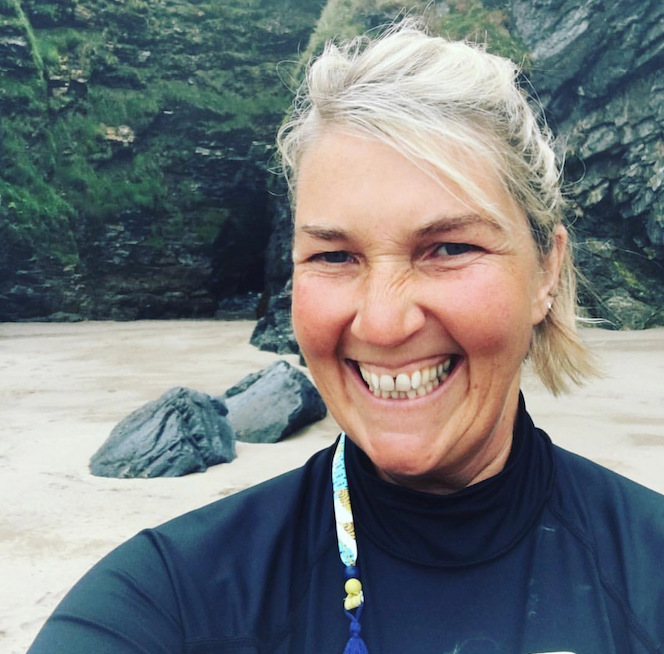
AUTHOR: ANNIE LEEAnnie is a coach, coach supervisor & coach adventurer! Warmth, depth & joy sum her approach up in a nutshell! CategoriesArchives
September 2026
|
 RSS Feed
